The Evolving Paradigm of Motion Design
Food for Thought:
Reframe - The Evolving Paradigm of Motion Design
Published
January 2026
Edited by
Emanuele Colombo
This article covers a vital exploration by Emanuele Colombo into the profound shifts currently reshaping our industry. In this insightful piece, Emanuele navigates the challenging landscape of dwindling inquiries and studio transformations, suggesting a fundamental paradigm shift that demands our attention.
Join us as he reflects on the vibrant history of motion design, dissects the forces driving today's disruption, from economic headwinds and social media's evolution to the rapid advancement of AI, and offers a compelling vision for our future. This is more than an analysis; it's a call to re-examine our roles, rebuild our connections, and collectively forge a new path forward.
This message from a freelancer I've worked with multiple times landed in my inbox in late 2024 like a stone. It wasn't the first of such messages I'd received that year, and it wouldn't be the last. With major studios announcing mergers and acquisitions, freelancers reporting empty inboxes, and a growing anxiety about AI's role in creative work, it felt like we were living through a profound crisis in the motion design industry.
Throughout 2025, we've seen signs of recovery, though the experience has been far from universal. Some studios and freelancers have found their footing again, while others continue to struggle. What's become undeniable, however, is that something fundamental has shifted. The motion design industry that's emerging from this transformation looks notably different from the one we knew just a few years ago, and success now requires adapting to new paradigms.
This is why I've titled this article 'Reframe': we need a fresh perspective to understand not just what happened during 2022/2024's slowdown, but what the positive signals of 2025 reveal about our industry's evolution.
With one important caveat: I could be entirely wrong. Like everyone navigating these shifting times, I'm simply following my instincts and making sense of things as I go. My hope, however, is that this article will serve as a spark for healthy discussion about where we're headed as an industry, acknowledging both the opportunities and the ongoing challenges.
"I haven't received a single inquiry in a month."
The Pioneer Days -
Building a Community from Scratch
I entered the motion design world in 2010. After graduating and working as a video editor for a couple of years, I decided to pursue a freelance career. I quickly became captivated by the early motion design videos emerging on YouTube. It was the dawn of social media content, and for me, the beginning of a passionate career in a field that barely had a name yet.
I have fond memories of that era. A small but vibrant community. Very limited resources (Video Copilot was practically the only website available), but there was an infectious enthusiasm for discovering new techniques.
We weren't just following established practices; we were collectively inventing them, figuring out techniques and immediately sharing them with others.
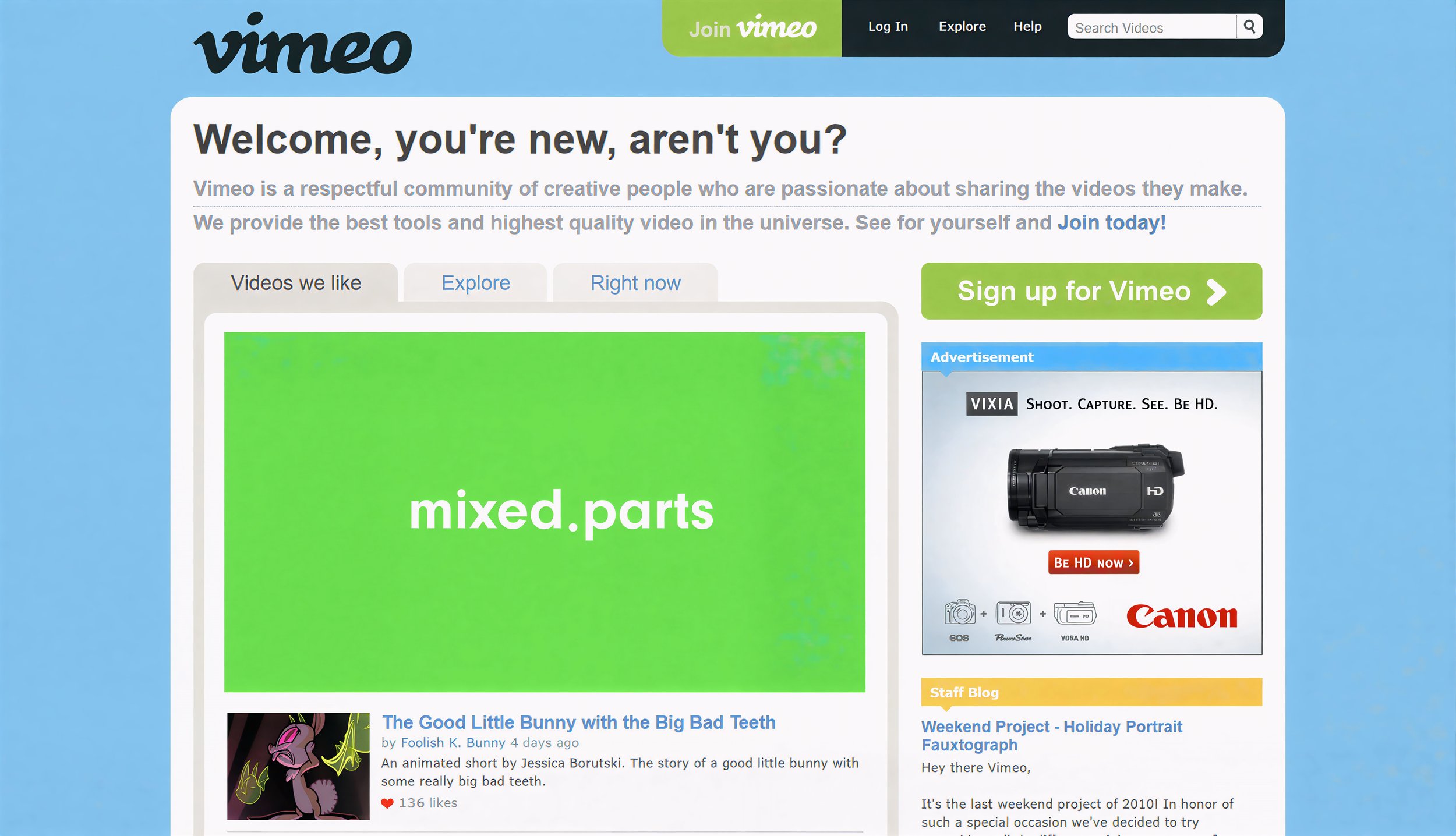
My typical day involved checking featured videos on Vimeo, a quick visit to Motionographer, exchanging ideas on MixedParts, and participating in collaborative projects like 9Squares or MotionCorpse. It was a period of collective exploration and organic growth.
What we lacked in formal structure, we made up for in connectivity. Motion design wasn't yet an established industry with clear career paths, it was more like a movement, driven by shared passion and mutual support.
Mixed Parts, Created by Daniel Savage
What made this era particularly special was Instagram's original algorithm, which connected people based on shared interests rather than virality metrics. This created a genuine community space where motion designers could have meaningful exchanges about craft and technique.
For brands, Instagram's visual focus created a demand for engaging animated content. Marketing teams needed constant fresh material for their feeds, and the short-form, looping nature of the platform perfectly matched motion design's strengths.
Art directors regularly discovered new talent through the platform, and hiring often happened through direct messages rather than formal channels.
The Instagram Boom:
When Everything Aligned
The rise of Instagram marked a golden era for motion design. For the first time in creative history, the platform created a perfect alignment between creators, clients, and audiences all sharing the same space.
For motion designers, Instagram became the ultimate portfolio platform, a space where work could be shared, discovered, and celebrated within a community that understood its value. I remember conversations with colleagues questioning whether traditional websites were even necessary anymore when Instagram profiles were driving so much more engagement and work opportunities.
This era was characterized by extraordinary creative freedom. As motion design and social media grew together, brands were still exploring how to leverage this new visual language. They gave designers considerable latitude to experiment and innovate, recognizing that the medium itself was still being defined.
This experimental phase allowed motion designers to push boundaries creatively while brands were figuring out how these dynamic visuals fit into their communication strategies.
The novelty of motion design in social media contexts meant there were fewer established rules and more opportunities for bold creative approaches.
The business model became refreshingly straightforward:
Create something impressive, either a commercial or personal project
Share it on social media
Clients see your work and hire you
Complete the work and return to step one
When the pandemic hit, this dynamic intensified.
As businesses scrambled to shift communications online, motion design, already perfectly suited for digital platforms became essential. While traditional video production struggled with lockdown restrictions, motion designers could continue working remotely without disruption.
Suddenly, every brand needed animated explainers for their COVID protocols, remote services, and digital transformations. For a brief period, the demand exceeded the supply of qualified motion designers.
The Instagram Paradigm -
Motion Design as a Language
Style
The Instagram era championed Corporate Memphis and other highly stylized, instantly recognizable aesthetics. These visual languages were optimized for quick recognition in feeds and helped establish motion design as its own distinct art form with unique stylistic signatures.
Projects
Content was predominantly created for social media platforms, with short-form animations designed to capture attention in crowded feeds. The focus was on standalone pieces that could generate engagement and showcase technical skill simultaneously.Tools
After Effects reigned supreme as the industry-standard tool, with Cinema 4D gaining popularity for more complex 3D work. The emphasis was on mastering these specific platforms rather than integrating across multiple design systems.Collaboration
Studios assembled "dream teams" of specialized animators and designers for each project, bringing together illustrators, character animators, and motion graphics artists to create visually striking content.This collaboration model prioritized creating impressive standalone pieces rather than integrated design systems.
Client Acquisition
Social media played a fundamental role in connecting creatives with clients. Visibility on Instagram often translated directly into project inquiries, with many freelancers building entire businesses through platform-driven discovery.Community
The dialogue was centralized around Instagram, Motionographer, and Vimeo, with industry publications and featured showcases establishing shared standards of excellence. These platforms served as both portfolio spaces and community hubs where emerging talent could be discovered and celebrated.
The Perfect Storm -
When the System Broke
The past two years have witnessed a dramatic reversal of fortune. While experiences vary, some found 2023 particularly difficult, others felt 2024 delivered the harder blow, the consensus is that something fundamental has changed across the entire industry.
After numerous conversations with colleagues and clients, I've identified three critical factors that have created a perfect storm for motion design.
1. Economic Contraction and
Broken Networks
This is perhaps the most obvious factor. The economic tensions stemming from the Ukraine war and the post-pandemic bubble burst have impacted markets nearly as severely as the 2008 crisis, albeit in different ways.
Silicon Valley has experienced massive waves of layoffs, and big studios had to adapt through acquisitions and merging. Many professionals lost their jobs and entered the freelance market, while many freelancers, struggling to find work, through the security of full-time employment.
The animation and motion design studio landscape has visibly transformed in response. Industry leaders like Buck and Giant Ant merged under the Residence umbrella, while Gunner was acquired by Duolingo. These strategic moves represent a broader industry trend where studios are seeking stability through new business structures and partnerships.
But there's a specific aspect worth highlighting: the nearly 50,000 layoffs across Silicon Valley aren't just individual tragedies – they've permanently damaged our industry by breaking established connections. When so many layoffs happen simultaneously, they destroy an ecosystem of relationships and workflows that took years to consolidate and will take just as long to rebuild.
Just a few years ago, I had a clear mental map of our industry's landscape: which designers worked at which studios, which freelancers specialized in which techniques, which art directors had which aesthetic preferences. That map has been completely redrawn, and we're all still trying to navigate with outdated coordinates.
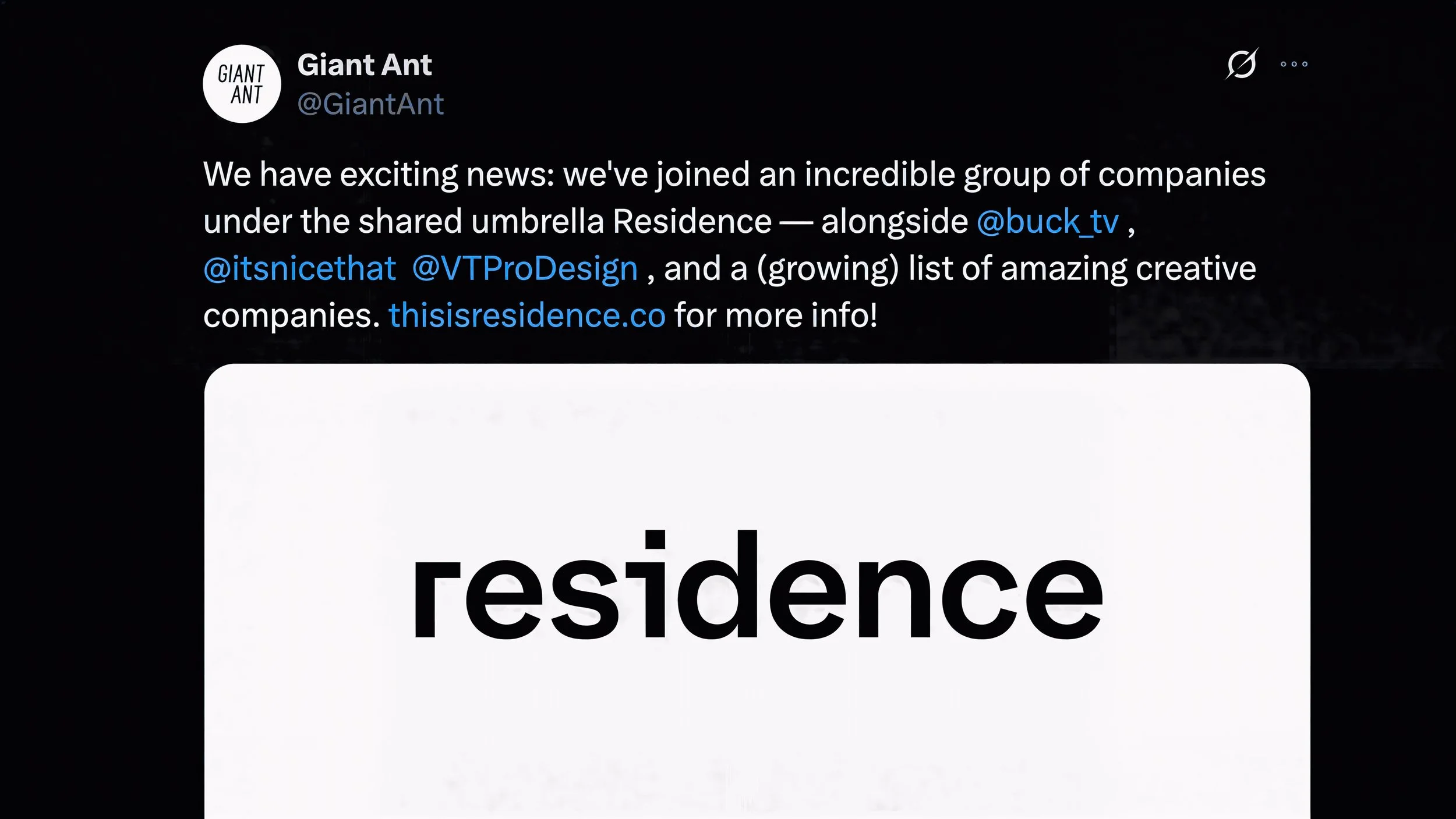
Duolingo - Duocon, Gunner
2. The Evolution of Language
on Social Media
Instagram was once the perfect platform for motion design: visual, curated, with an audience that appreciated craft and technique.
But the social media landscape has undergone a radical transformation, driven by TikTok's explosive growth and Instagram's reactive pivot to Reels.
This shift has fundamentally altered content priorities. The thoughtful, technique-driven pieces that once defined excellence in our field struggle to find an audience in an environment optimized for immediate engagement and endless scrolling.
Vertical video dominates, attention spans have shortened, and production values have become less important than authenticity and immediacy.
This shift has radically changed how creatives showcase their work and connect with clients.
Our meticulously crafted pieces now struggle to find an audience in an environment optimized for immediate consumption, and clients are increasingly reluctant to invest in polished animation when a quickly produced, authentic-feeling video might generate more engagement.
Equally important, Instagram has lost its vital function as our industry's de facto portfolio platform. The algorithm that once connected us with peers and potential clients now prioritizes reaching broader, general audiences.
While this might increase overall visibility, it has eliminated what was once our most valuable asset: a dedicated space where professionals could speak to professionals.
Instead, our content is now optimized for the curious gaze of non-specialists, offering behind-the-scenes glimpses of our craft to those who know little about it, rather than showcasing technical excellence to those who understand and might commission it.
This transformation hasn't just changed what we make, it's fundamentally altered how our work is discovered, valued, and purchased.
@ginyboi
@scadatlmomentum/@lunaliuart
3. The AI Acceleration
There would be an enormous amount to say about the impact of AI on our industry, but I'll limit myself to one critical observation: this wave of AI euphoria has diverted attention away from craft excellence toward the technology itself.
Where industry discussions once centered on technique refinement and artistic development, they now predominantly revolve around AI tools, prompt engineering, and automated solutions.
The deep appreciation for the nuanced craft of motion design has been partially eclipsed by the spectacle of what AI can produce.
Veo3 - Crystailine Flowers Bloom, Google Deepmind
Is this the beginning of a new era?
The New Paradigm: Motion design as a discipline
Where does all of this disruption lead us in 2026? The answer seems increasingly clear: We're witnessing a fundamental shift from motion design as a standalone language to motion design as a discipline that supports other design fields.
This transformation represents not just a change in how we work, but in how motion design is conceptualized and valued in the broader creative landscape.
1. Style
Back to Essentials From a stylistic point of view, we're returning to the roots of motion design in its original definition: graphic design in motion.
Styles that emphasize functional aesthetics and system-based thinking are gaining prominence, while more narrative/illustrative approaches will likely face greater challenges. In this evolving landscape, developing a highly recognizable personal style becomes less valuable than cultivating a systemic vision.
The ability to understand how motion functions within broader design systems and to adapt to different brand contexts now outweighs the benefits of a distinctive signature style.
Studios already positioned in this space like Vucko, ThruMotion and Studio Dumbar, are beginning to stand out in this transforming landscape precisely because they prioritize systematic approaches over stylistic signatures.
Spotify Wrapped 2022 - Vucko
2. Projects - The Great Divide
Just a few years ago, motion designers were involved in an enormous range of projects, from one-minute social media videos to animated icons for apps.
What we're witnessing now is a significant fracture in the field—on one side, video production will be increasingly impacted by AI, and on the other, the world of UX and branding where our expertise remains more secure and valuable.
That means the business of selling finished motion pieces is becoming increasingly challenging, but the market for motion design consultation, training, and integration into larger systems remains robust.
Forward-thinking designers are shifting from delivering one-off projects to creating comprehensive motion design systems that clients can implement across their organization.
Instagram, Studio Dumbar
3. Tools - Integration Era
It's no surprise that software like Rive, Cavalry and Jitter are having their moment of glory because they serve exactly what's trending right now. These tools emphasize integration, efficiency, and systematic approaches rather than one-off creative pieces, a direct response to the market's evolving demands.
This shift is also evident in the growing preference for code-based animation formats over traditional rendered videos, creating animations that exist as programmable instructions rather than fixed media files.
These code-driven animations integrate directly with websites and applications, enabling responsive behavior and interactive elements without requiring new renders, and can be implemented across multiple platforms with a single export.
Each tool offers its own native format optimized for developers to implement, further blurring the line between motion design and development.
Get Started With Rive, Rive
4. Collaboration - Embedded Expertise
Gone are the days when studios assembled dream teams of designers and animators for social media commercials. Our role has fundamentally shifted to supporting design and branding teams rather than leading standalone projects.
This transition has profoundly impacted both project types and collaboration models. Motion designers now often find themselves embedded within broader teams, contributing motion expertise to larger initiatives rather than owning the entire creative process.
In the future, we'll likely develop closer relationships with brand and UX designers than with illustrators, becoming integral parts of digital product development rather than creators of isolated animated pieces.
This approach transforms the relationship from transactional to consultative, placing the motion designer in a strategic role that's harder to replace with automated tools or generic solutions.
5. Client Acquisition - Networks Over Feeds
The days when Instagram visibility could reliably generate client inquiries appear to be over. As motion designers, we must recognize that strategic networking and relationship-building have become far more valuable than social media presence for securing meaningful work.
This means investing time in industry events, cultivating direct relationships with design teams and agencies, and positioning ourselves as consultative partners rather than service providers.
The most successful motion designers in this new landscape will be those who establish themselves as trusted advisors within specific networks rather than those who chase general visibility in increasingly crowded and deprioritized social feeds.
6. Community - Digital Fragmentation
Perhaps most telling of all is how our community dialogue has transformed. The centralized hubs that once united our industry have given way to dozens of specialized Slack channels and Discord servers, each serving niche interests and subgroups.
While this fragmentation offers depth in specific areas, we've lost the shared space that once celebrated excellence across the entire field. There's no longer a unified platform where emerging talent can be discovered, where industry standards can be established, or where collective knowledge can be exchanged at scale.
Rebuilding these community connections—whether through new platforms or revitalized existing ones—will be essential to preserving motion design's identity as a discipline even as its practice becomes more integrated with other fields.
Fortunately, initiatives like framerate.tv and frendr.co are emerging to fill this void, working to create dedicated spaces where motion designers can reconnect and rebuild the sense of community that once defined our industry.
In Motion: Aftermovie 2024, We Are Playgrounds
A Call to Arms for
Motion Designers
I hope this article serves as a catalyst for our entire industry, not just an analysis, but a spark to provide clearer pillars in this confusing time and to reignite passionate discussion that brings our community back together around the craft we love.
The perfect storm of economic contraction, social media transformation, and AI disruption has undeniably shaken what we once took for granted.
Our familiar ecosystem has fractured, leaving many of us adrift in uncertainty. The motion design puzzle we knew has shattered, leaving us in a state of uncertainty and, at times, discouragement.
But in this fracture lies opportunity.
2026 holds tremendous promise precisely because we can now redefine our position within the broader creative landscape. Motion design isn't fading, it's evolving from a standalone specialty into an integrated discipline that enhances UX, branding,and the entire digital experience spectrum.
Each of us as individual pieces of this puzzle must now find our place in a completely new picture we are creating. We aren't passive witnesses to change, we're active architects of our own transformation and the industry's future.
This moment of profound change demands that we preserve the core values that have always defined us: our commitment to sharing, our celebration of creative excellence, our mutual support, and our passion for deep, meaningful conversation about craft.
These principles are not tied to a specific job description or platform, but to the spirit of creative exploration that has always driven motion design.
This is a call to every motion designer: wherever you find yourself working, whether in a corporate design team, a tech startup, or a traditional studio, carry forward the ethos of our community.
Continue to share, to critique, to inspire, and to support one another. Our greatest strength has never been in the tools we use or the platforms we work on, but in our collective passion and our ability to grow together.
It's time to reframe. To look beyond what we've been and boldly envision what we can become.